
Dry fruits
Why the kaju and badam rate changes, and when to buy
Dry fruit is one of the few things in a grocery basket whose price genuinely moves month to month. This is what moves it.
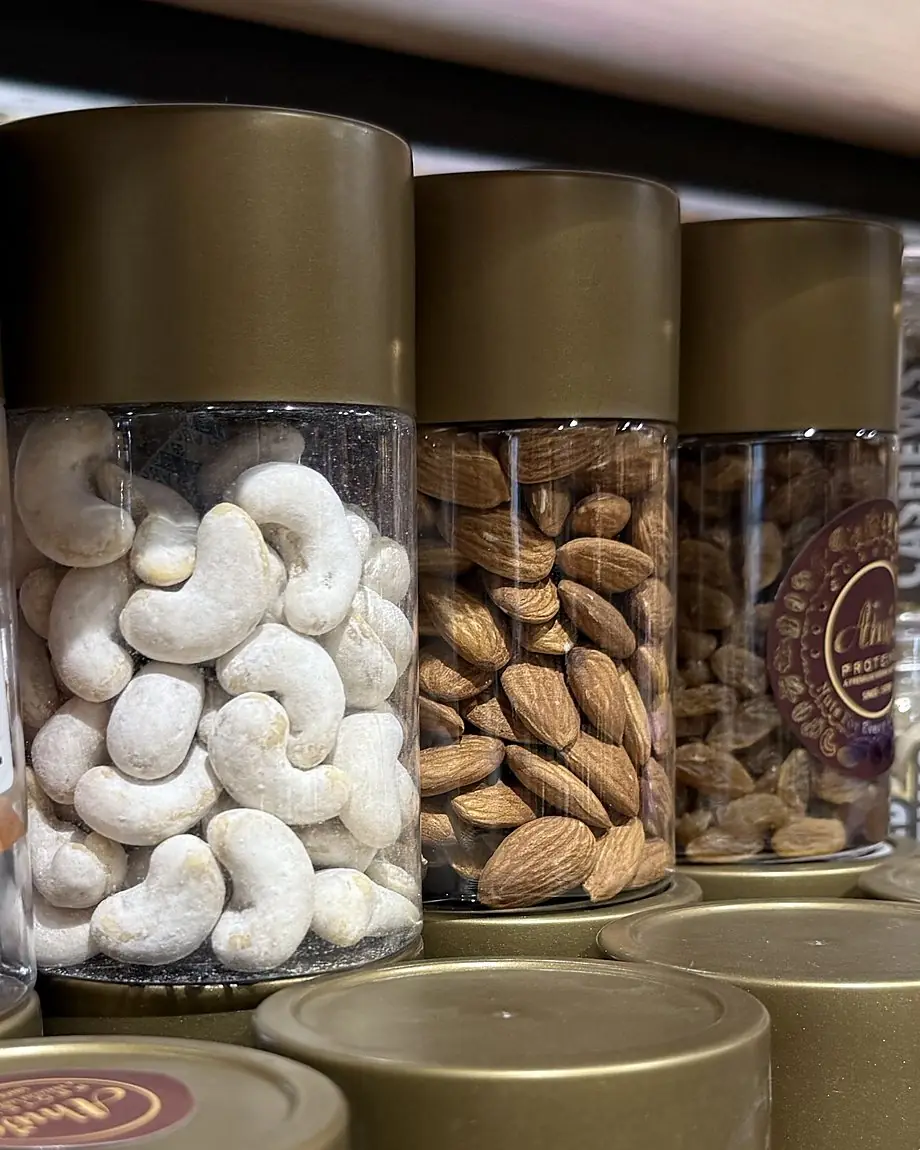
People ask us for the kaju rate the way they would ask for the price of a bar of soap, and are sometimes surprised that the answer has a date attached to it. It is a fair thing to be surprised by. Almost nothing else in a household basket behaves this way.
Here is what is actually underneath the number.
It is an agricultural commodity with one harvest a year
Every nut on the counter comes off a tree on an annual cycle. A new crop arrives, the market has plenty, and the rate softens. Through the year that stock runs down and the rate firms up again. This happens at different times for different nuts — walnut comes in through autumn, cashew is an Indian spring crop, almond arrives later in the year — which is why they do not all move together.
A bad season anywhere that grows a lot of one nut moves the price of that nut worldwide, months before it reaches a counter in Bhopal.
A lot of it is imported, so the rupee is in the price
India grows and processes cashew, but a great deal of the almond, walnut and pista sold here has been bought in dollars somewhere along the line. When the rupee weakens, the landed cost rises even if nothing about the crop has changed. Add import duty, which is set by policy and can change in a budget, and you have two inputs that have nothing to do with farming at all.
Festivals do exactly what you would expect
Demand for dry fruit in India is not spread evenly across twelve months. It concentrates hard around Diwali, and again through the wedding season that follows. Everybody in the trade knows this is coming, and the rate in the weeks before Diwali reflects the fact that everybody knows.
If you are buying for corporate gifting, this is the practical consequence: buying in September is usually calmer than buying in the last week of October, in price and in every other way.
"Kaju" is not one product
This is the part that makes comparing two quotes difficult, and it is worth understanding properly.
Cashew is graded, and the grades have names that look like codes — W180, W210, W240, W320 and so on. The number is roughly how many kernels make up a pound, so a lower number means a larger kernel. W180 is the big showy one. W320 is the standard cooking grade and perfectly good. There are also broken and split grades, which taste identical and cost noticeably less, and which are the sensible choice if the kaju is going into a gravy or a mithai where nobody will see the shape.
Almonds work the same way with different vocabulary — origin and size both move the price, and the small dense ones are not the same product as the long flat ones.
So when one shop quotes you a lower kaju rate than another, the first question is not who is cheaper. It is which grade. Ask both.
Loose against packed
Weighed loose at a counter, you are paying for the nut. In a sealed branded pack you are also paying for the pack, the brand and a distribution chain — and getting a printed date and a tamper seal in return, which for a gift is worth something.
Neither is a trick. They are different products for different purposes. Most of what leaves our mewa counter is weighed loose, because most of it is going into a kitchen.
Why this site has no price list
Because a price list would be wrong. Not immediately, but reliably — a page put up in August and quoting a rate in November is either quoting you too much or promising something we cannot honour. Neither is a good way to start.
So we quote on the day, on WhatsApp or at the counter, for the grade you actually want. It is one message and you get a number you can hold us to.
When to buy, in practice
- For a festival, four to six weeks ahead. The rate is usually better and the shop is certainly calmer.
- For the house, buy the quantity you will finish in a month or two rather than stocking up. Nuts carry oil and go stale — see storing dry fruits through a Bhopal monsoon. A good rate on something that turns rancid in a cupboard is not a saving.
- For cooking, ask about the lower grades and the broken pieces. Same nut, same taste, less money, and nobody sees the shape once it is in the pan. A hotel or catering kitchen buying by the kilo can start on our bulk dry fruit supply page.